
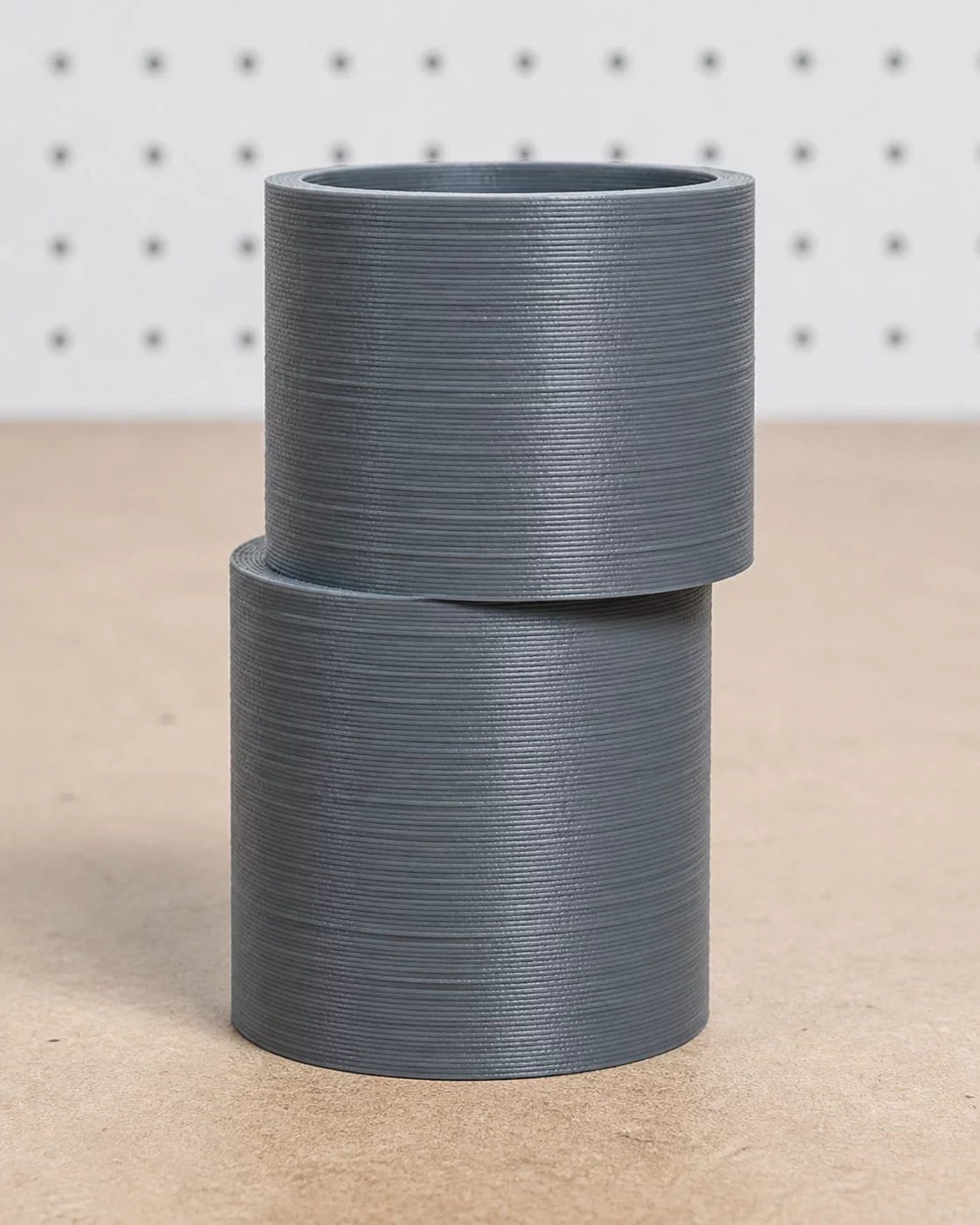
Layer shifting represents one of the most critical structural failures in additive manufacturing, where subsequent deposition planes abruptly lose registration with the geometry below. The toolhead continues extruding along a shifted planar reference frame, producing a prominent horizontal ledge and ruining both dimensional integrity and mechanical utility.
Root Cause Topology & Mechanical Origins
The primary vector behind sudden planar translation stems from missed micro-steps in the stepper motors or physical tooth skipping along GT2 timing belts. When travel acceleration exceeds available motor torque, the rotor slips past pole positions. Loose motor pulley grub screws can also rotate freely against flattened motor shafts under rapid directional deceleration.
Thermal saturation in stepper driver circuits provides another frequent trigger. As TMC drivers overheat, internal thermal protection shuts down current phases intermittently, inducing invisible stall events during fast travel moves. Alternatively, physical collisions between the nozzle and curled overhangs or dense infill patterns will mechanically halt the toolhead without firmware awareness.
Systematic Calibration & Recovery Directives
- Calibrate GT2 belt tension to 110–120 Hz resonance frequency using an acoustic frequency analyzer.
- Inspect stepper driver VRef potentiometers or TMC UART RMS current values to eliminate thermal runaway stall.
- Reduce travel jerk below 8 mm/s and activate Z-hop over printed perimeters to prevent mechanical nozzle collisions.
Following comprehensive hardware verification and torque validation, layer registration returns to sub-50-micron repeatability across prolonged industrial print cycles.
Forensic Discussion & Logs
No telemetry logs recorded yet. Be the first metrologist to document observations for this specimen.
Append Telemetry Observation